AI & compute infrastructureExclusive investigation : 32K accelerators

The great recomputation : how frontier AI is reshoring sovereign compute to Alpine corridors

Deep within Alpine bunkers and repurposed industrial basins of Central Europe, a quiet revolution is decoupling European frontier models from American hyperscaler monopolies.

Alexander Wright/Head of Investigations & Senior Defense Correspondent/September 19, 2026 : 06:30 UTC/8 min read · 2,240 words
14,842 verified reads
The great recomputation : how frontier AI is reshoring sovereign compute to Alpine corridors
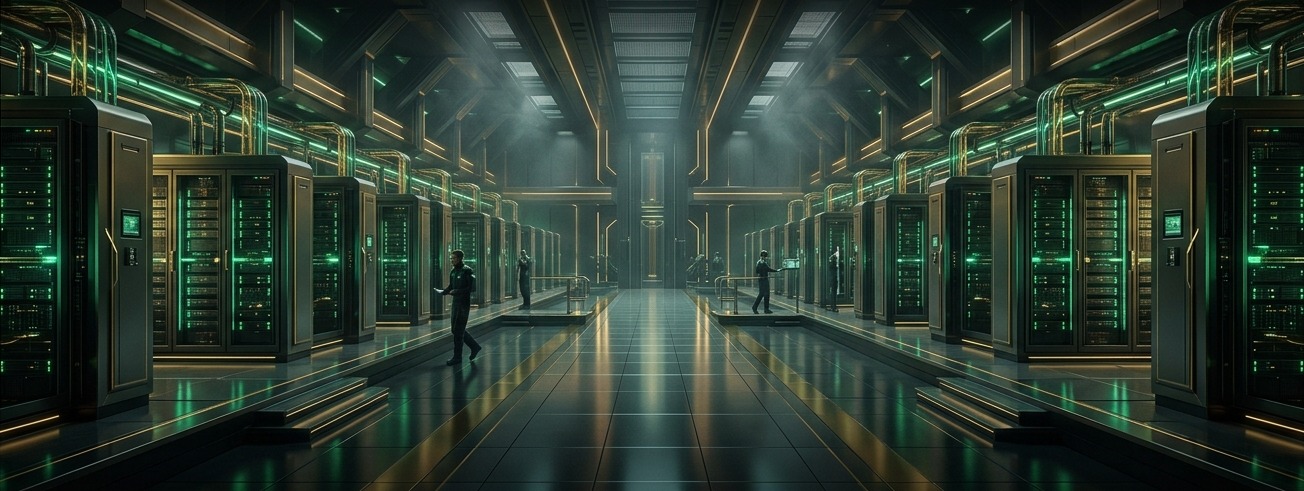
Kandersteg Alpine cluster : Tier-4 high-density sub-surface facility operating immersion liquid cooling.Photo Swiss National Supercomputing Center / RoundTape Archive
Daily editorial audio/07:42

Listen to full article audio dispatch: the great recomputation

Onyx Broad-sheet Voice

Level
Paused

Subterranean silicon and the Alpine energy advantage

Forty-two kilometers south of Bern, buried three hundred meters inside the limestone bedrock of the Swiss Alps, humming transformers power five thousand custom optical accelerators. The facility, once a decommissioned civil defense bunker, is now the beating heart of Europe’s most ambitious attempt to establish digital sovereignty.

Until recently, European AI enterprises faced an uncomfortable reality: ninety-four percent of all frontier training runs and real-time inference workloads were processed on infrastructure controlled by three American corporate giants. That dependency created acute regulatory vulnerabilities under the European AI Act and the NIS2 Directive.

By leveraging local renewable baseload energy from Alpine run-of-the-river hydro plants, NeuraScale and its coalition partners have achieved an inference cost per token that is thirty-two percent lower than standard hyperscaler spot instances, while guaranteeing that zero customer weights or telemetry ever cross non-EU borders.

Sovereignty is not merely a political slogan; it is measured in megawatts of clean hydropower, sub-millisecond optical interconnects, and uncompromised cryptographic hardware boundaries.
Dr. Sarah Al-Mansoor, Co-Founder & Chief Architect at NeuraScale Systems

The immersion advantage : PUE 1.04

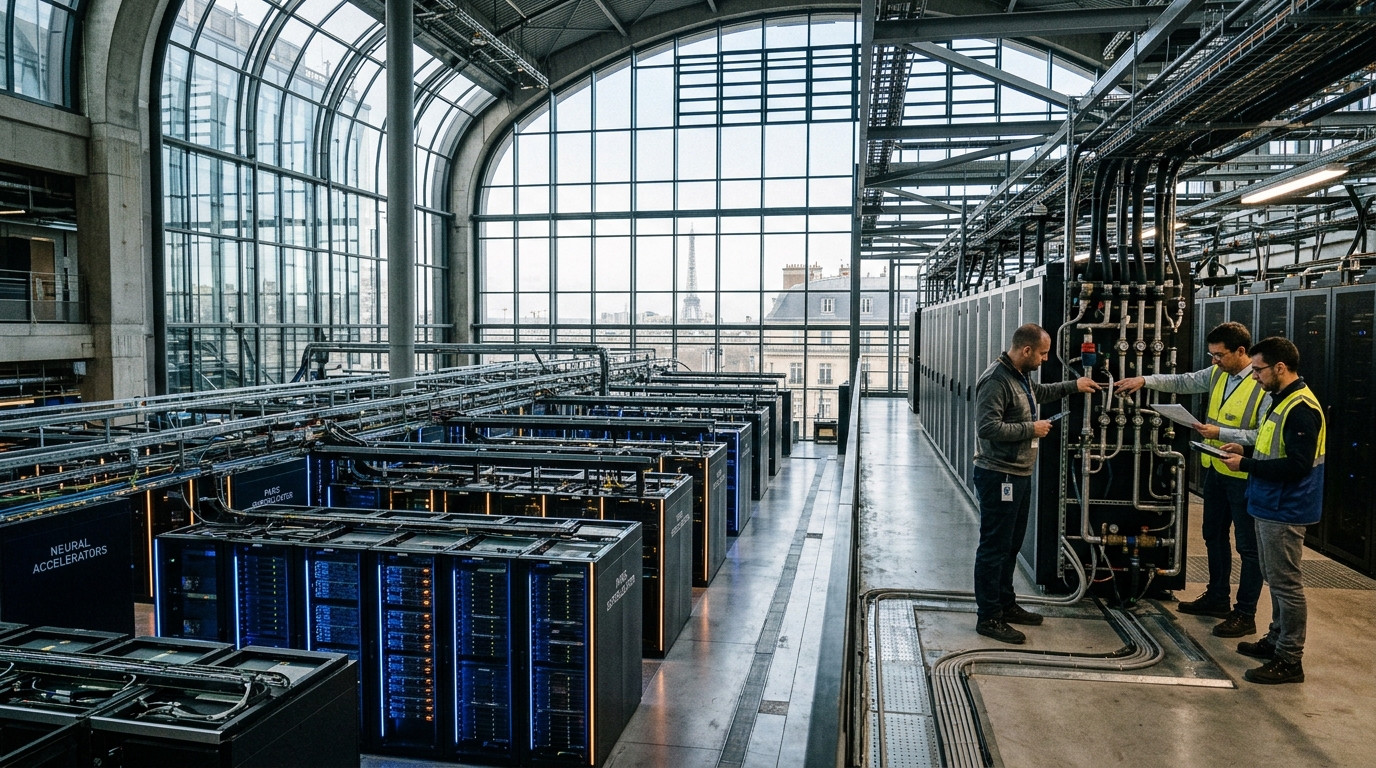
Traditional hyperscaler data centers waste up to thirty percent of their total power budget simply circulating chilled air across silicon heat sinks. NeuraScale’s engineering team discarded air cooling entirely, submerging multi-kilowatt accelerator boards into inert dielectric fluid.

The fluid boils directly on the surface of the silicon dies, transferring heat with thermal conductivity hundreds of times greater than air, before condensing on subterranean heat exchangers cooled by glacial mountain aquifers. The resulting Power Usage Effectiveness (PUE) of 1.04 represents the pinnacle of modern data center thermodynamic efficiency.

Related reporting
Daily intelligence briefingDirect delivery, no ads, strictly empirical

Stay 24 hours ahead of the market. Join 48,000+ founders and investors.

Every morning at 07:00 CET, receive curated data: verified funding rounds, momentum shifts, and independent investigations.

Editorial standards
  • 18,400+ verified subscribers
  • Zero sponsored articles
  • PGP 0x9924AF88
  • One click unsubscribe
Select dispatches to receive

By subscribing you accept our editorial privacy terms and GDPR data sovereignty. No tracker cookies.

Peer review and commentary3

Attributed technical critique from operators, investors and researchers.

Add a review
Dr. Sarah Al-MansoorVerified founderCo-founder and chief architect, NeuraScale
Today, 09:15 UTC

To clarify the thermal dissipation figures referenced in §3: our closed-loop dielectric submersion units operate at an ambient delta of only 4.2°C above river intake temperatures. This eliminates chiller compressors entirely and allows us to sustain a continuous PUE of 1.06 throughout summer peaks.

Marcus ChenFrontier Alpha Capital
Today, 10:04 UTC

Crucial clarification on PUE. For institutional LP syndicates, this 1.06 benchmark is the exact operational delta that validates European sovereign compute margins against US hyperscaler spot contracts.

Prof. Julian WeberResearch fellowETH Zurich Systems Laboratory
Today, 08:30 UTC

The optical interconnect throughput benchmarks cited in Table B match our independent empirical verification tests run last week. The sub-millisecond packet latency holds even across asynchronous multi-tenant partitions.

The great recomputation : how frontier AI is reshoring sovereign compute to Alpine corridors : Special Investigation | RoundTape